Glass partitions leak every conversation, and the instinct is to replace them with drywall. In most of the office space in this valley that's the wrong move, because there usually isn't enough glass in the building to afford blocking any of it.
The daylight constraint
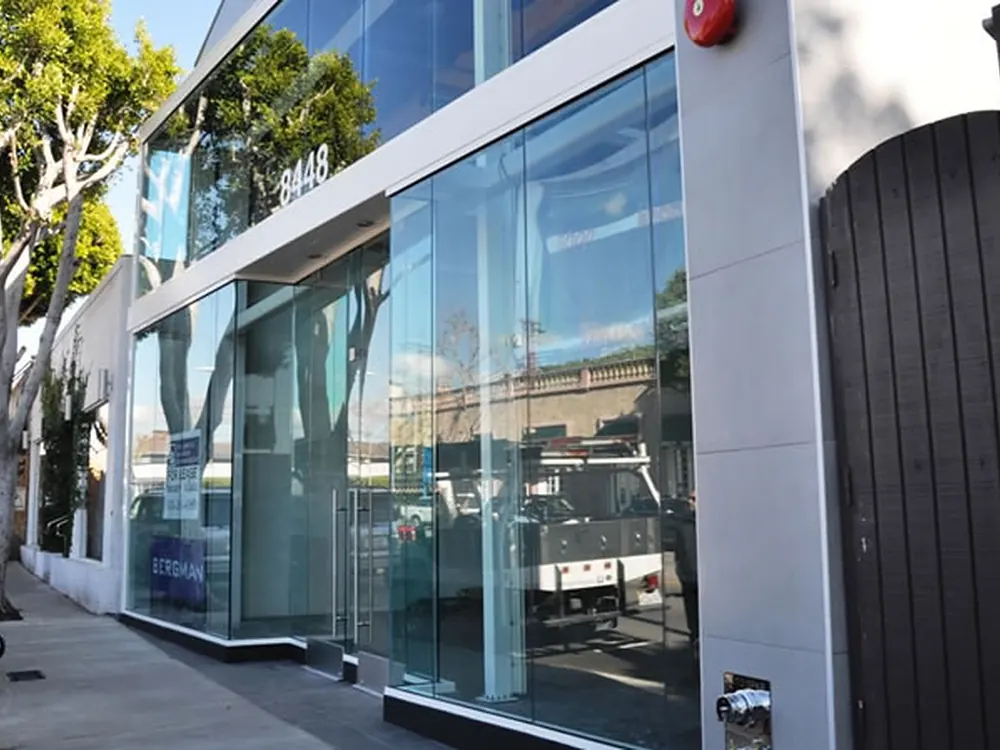
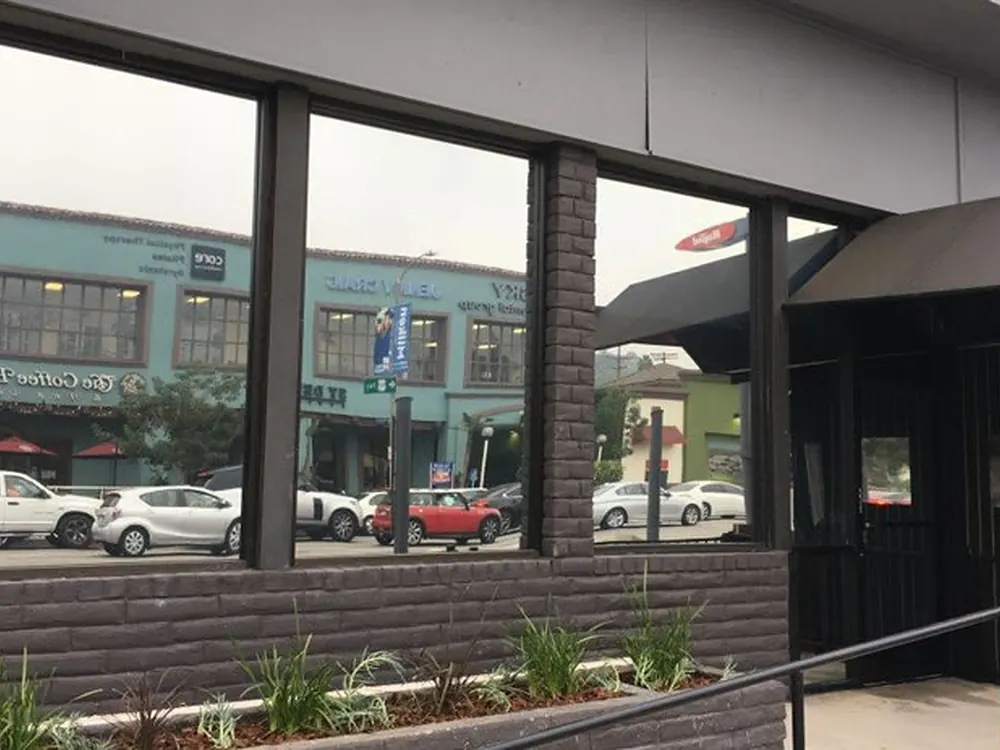
A lot of the professional and medical space here sits in low-rise buildings or in the office fronts of industrial units, where the glazing is confined to one elevation and everything behind it depends on borrowed light.
Build a solid-walled conference room across that elevation and you've cut off the interior entirely. Glass partitions were the answer, and structurally they work — light passes through, the space reads open, and the back of the suite doesn't feel like a storeroom. The privacy failure is a side effect of solving that, not carelessness.
What frosted film actually is
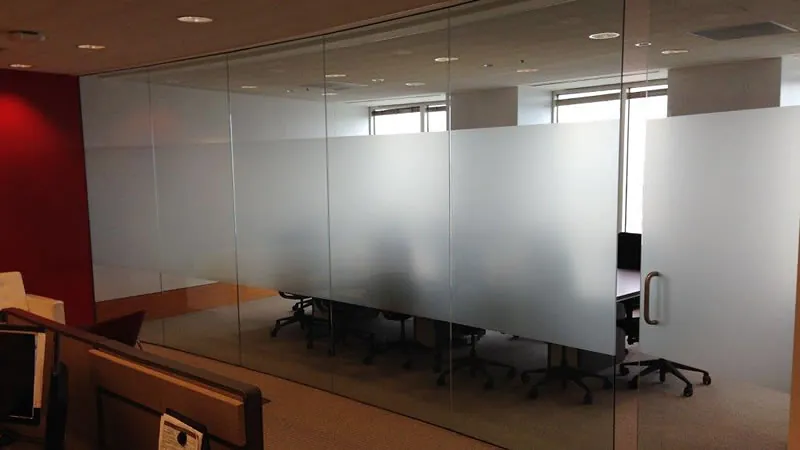
Frosted film is a matte polyester laminate that scatters light rather than blocking it. On glass it reads as sandblasted or acid-etched — the classic diffused look — at a fraction of the cost of real etched glass, and it installs in an afternoon rather than a lead time.
The critical property is that it diffuses without darkening much. A fully frosted partition still passes daylight into the interior. You lose the sightline, not the light, which is exactly the trade you want. That's what frosted privacy film is for.
Four ways to use it
Covering the whole pane is one of four routes, and frequently the least useful:
- Full frost — nothing visible, all the light. The right call for exam rooms, HR, and washrooms.
- Banding — a frosted strip at seated eye height, screening the people in the room with clear glass above and below.
- Gradient — solid frost at the sill running to clear at head height, which reads as design rather than a repair.
- Cut graphics — a name or motif cut from frost film, giving identity and screening in a single layer.
Banding is the option nobody asks for and most end up choosing. It handles the actual problem — people at desk height — while passing considerably more light than full coverage.
The requirement hiding in the design decision
Full-height clear glass in a commercial space generally needs a visual marker so people don't walk into it. It's an accessibility issue as much as a safety one, and a great many buildings satisfy it with a lonely vinyl dot at eye level that nobody wanted.
A frosted band or a cut motif satisfies that requirement and looks like it was intended. If the glass is being treated for privacy anyway, both are handled in one go — raise it with the architect or landlord early, because splitting it into two jobs costs noticeably more.
Interior and perimeter glass want different things
Interior partitions want frost. Perimeter glass almost never does — out there the problem is heat and glare on a west elevation in a valley that hits a hundred and two, which is commercial window tinting territory.
Most projects end up a mix, specified room by room. If you're planning a fit-out or fixing one that isn't working, send us the floor plan and we'll mark up what each area actually needs and quote it as one scope.